Routers
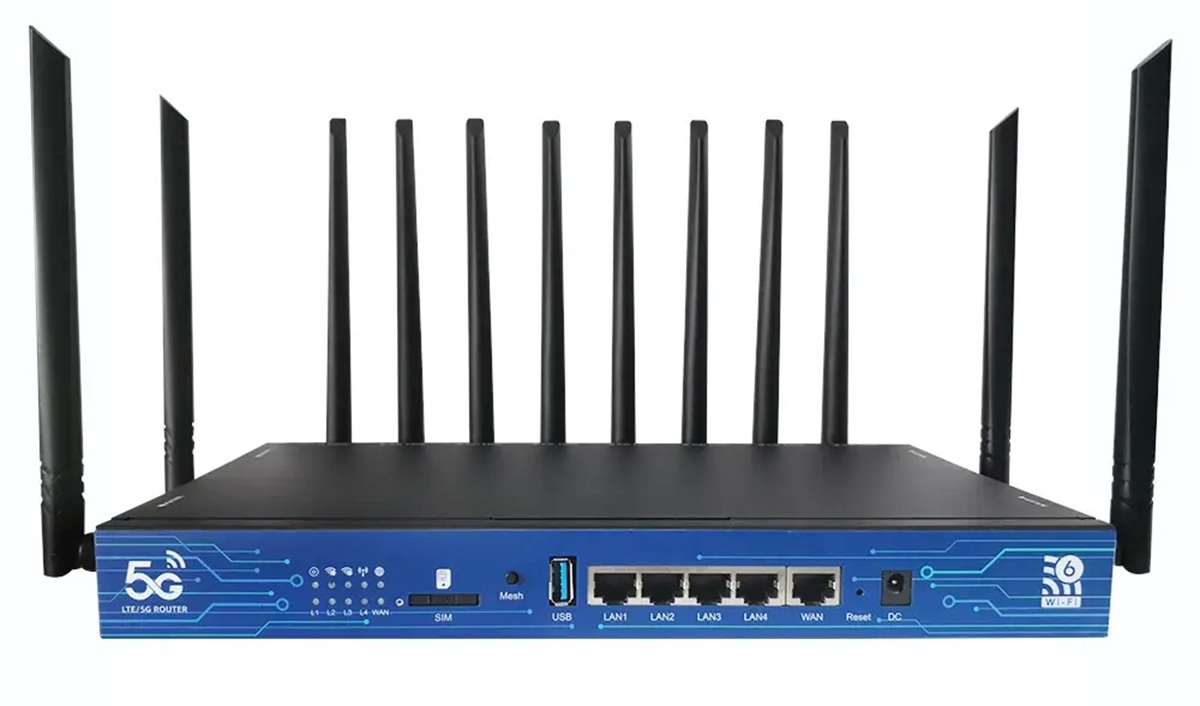
A router can also be called a gateway device. In the OSI/RM, the router performs the relay tasks of the network layer and the third-layer relay tasks, storing and forwarding data packets between different networks.
Router's Core Functions:
- Network interconnection: Connecting multiple independent networks, such as home networks and the Internet.
- Traffic management: Controlling data transmission priority and bandwidth allocation.
- Security protection: Providing firewall functions and access control.
- NAT conversion: Achieving conversion between internal network addresses and public network addresses.
A wireless router is a type of router that enables users to access the internet and has wireless coverage capabilities. It can be regarded as a repeater that forwards broadband network signals through an antenna to nearby wireless network devices. The popular wireless routers on the market generally support four access methods: dedicated xDSL/cable, dynamic xDSL, and PPTP. They also have other network management functions, such as DHCP service, NAT firewall, MAC address filtering, and dynamic domain name functions. Common wireless routers usually have one RJ45 port as the WAN port, which is the interface for UPLink to the external network, and the remaining 2-4 ports are LAN ports, used to connect ordinary local area networks. There is a network switch chip inside that specifically handles the information exchange between LAN interfaces. Generally, the routing mode between the WAN port and LAN port of the wireless router usually adopts the NAT method. Therefore, in fact, wireless routers can also be used as wired routers.